The Chip Tax and the Dusk Patrol: A Wildlife Guide to Margate Festival 2026
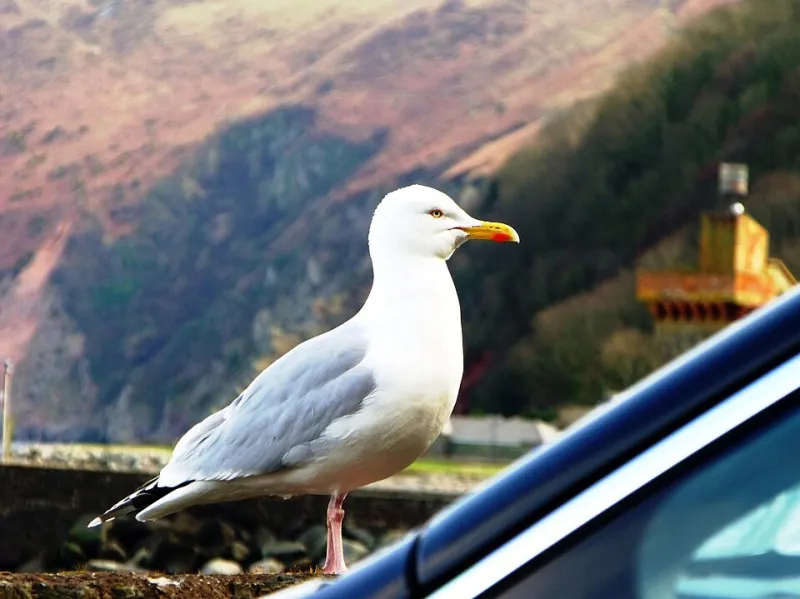
Photo: grassrootsgroundswell, CC BY 2.0, via Wikimedia Commons
Margate's festival season is many things: loud, salty, occasionally rain-lashed, and never entirely human. Between the stages, the food queues and the seafront railings, you are sharing the town with residents who did not buy a ticket. Some have feathers. Some have whiskers. One, memorably, has a taste for fried batter and absolutely no shame.
This is not a warning. It is a field guide. Think of it as the bit of festival etiquette nobody prints on the lanyard: how to eat, queue, bin and wander without turning the town's wildlife into a punchline or a problem.
The chip tax is real, and the gull is not sorry
The herring gull is Margate's most visible festival character. It has a wingspan that can blot out the sun, a call like a seagull being mugged, and a working knowledge of exactly when you are most vulnerable: the moment you look away from your chips.
It is tempting to call them aggressive. They are not. They are opportunistic, intelligent and very good at reading a crowd. A gull that has learned festival weekends mean dropped food, open bins and distracted humans is simply doing what any sensible creature would do. The problem is us: we bring the buffet, leave it unattended and then act surprised when it gets airborne.
The practical rules are simple. Eat facing the sea if you can, or at least keep your food covered between bites. Do not hold a pasty aloft while chatting. Do not leave trays on benches. Do not feed them, even for a photo — it teaches them that people are a reliable snack dispenser, which makes life harder for everyone, including the gulls. And if one does swipe your lunch, let it go. You are in its neighbourhood.
Foxes on the dusk shift
As the stages wind down and the seafront lights come on, another shift begins. Urban foxes are quietly brilliant at festival season: they patrol the edges of parks, side streets and bin stores, collecting what we leave behind. You may see one slip between railings at dusk, or hear that eerie scream that sounds less like wildlife and more like a bad review of your evening.
They are not there to join the party. They are there because festivals generate food waste, and food waste attracts scavengers. The answer is not to chase them or try to pet them. The answer is better bins, closed lids and a bit of collective tidiness. Foxes are shy by nature, and a fox that becomes bold around humans is a fox in danger.
If you see one, give it space. Do not corner it, do not feed it and do not let a dog off the lead to investigate. The same goes for the smaller creatures: the mice and rats that follow spilled chips are not a festival attraction, and the predators that follow them are not villains. It is a food chain, not a sideshow.
The underrated offenders
Gulls and foxes get the headlines, but the festival's most opportunistic wildlife encounters are often smaller. Wasps have a sixth sense for cider. Pigeons have a talent for looking innocent while advancing on a dropped chip. Starlings gather at dusk in chattering crowds that are genuinely beautiful — until one of them decides your pasty is part of the performance.
The etiquette here is mostly about waste and speed. Use the bins, use the lids, and if there is no bin nearby, carry your rubbish until there is. Festival organisers have got much better at waste management in 2026, but the seafront still fills up fast on a sunny Saturday. A chip on the ground is not just litter; it is a dinner bell.
A completely unscientific ranking
- The herring gull with a pasty. Top of the league. Bold, airborne, entirely unrepentant. The chip tax is not a rumour.
- The urban fox by the bins. Quiet, elegant, gone before you can get your phone out. Respect.
- The wasp in the cider. Persistent, unloved and strangely effective at clearing a picnic blanket.
- The pigeon on the stage. Not booked, but occasionally the most committed performer of the day.
- The starling murmur at dusk. Genuinely spectacular, especially over the seafront, as long as you are not holding food.
How festivals can be better neighbours
This is not just a punter problem. Events can design for wildlife from the start: fox-proof bins, sealed food-waste storage, clear signage about not feeding gulls, and staff briefings that treat wildlife as part of the site rather than a nuisance. Food traders can help by keeping serving areas covered and clearing quickly. Local wildlife groups tend to make the same point: the goal is not to remove the animals, but to stop them becoming dependent on us.
There is also a conversation worth having about nesting gulls. Herring gulls are protected, and rooftop nesting is part of Margate's summer soundtrack. Festivals that run near nesting sites need to think about noise, lighting and access. It is not glamorous work, but it is the difference between sharing the town and colonising it.
The five rules to take home
Do not feed the gulls. Bin your chips before they bin themselves. Keep an eye on your cider. Give foxes space and never corner them. Treat the bins as part of the festival, not an afterthought.
Margate's wildlife is not an interruption to the festival. It is part of the place. Get it right, and the gulls will still steal your chips, the foxes will still patrol at dusk, and the town will feel a little more like itself — which is, after all, the point.