The Tide Is the Curator: What Margate's 2026 Sand Art Taught Me About Letting Go
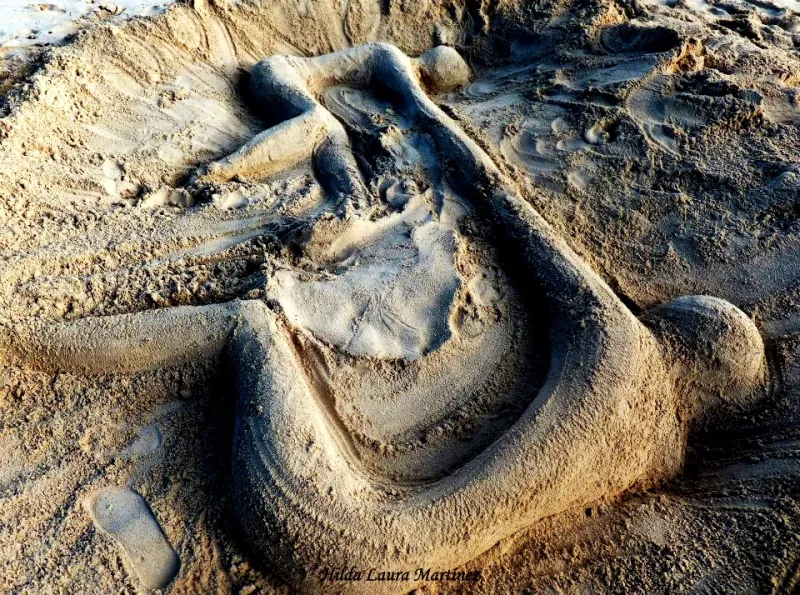
Photo: Hilda Laura Martínez, CC BY-SA 4.0, via Wikimedia Commons
On a bright morning back in August, I watched a woman in a paint-flecked apron draw a huge, looping wave along the promenade near the Harbour Arm. She worked fast, kneeling on the concrete while a small crowd gathered behind her. By lunchtime, the drawing was complete. By the next high tide, it was a grey smear heading out to sea.
That, roughly, was the deal at Margate Festival 2026. Not all of the festival's art lived behind glass or inside a tent. Some of it was chalked, sculpted, painted or piled onto the sand and the seafront, made in full knowledge that the sea would eventually take it back. The programme called these works 'ephemeral commissions'. Most visitors just called them the things you had to see before they vanished.
A gallery with a closing time
There is something slightly odd about going to look at art that you know is doomed. In a normal gallery, you might check the opening hours. On Margate's Main Sands in 2026, you checked the tide table.
One of the most popular pieces was a low sand relief near Nayland Rock, built by a small collective of artists over two mornings. It looked like a cross between a sea wall and a sleeping creature, all ridges and curves, with shells pressed into the surface. People queued to walk around it. Children were politely told not to climb it. By the following afternoon, the tide had flattened it into a smooth, ordinary beach. A few visitors kept returning to the spot, as if they expected it to reappear.
Further along the promenade, a chalk artist worked in short, urgent bursts, drawing patterns that stretched for several metres. She told me she had stopped planning anything more than a day ahead. 'You can't get precious about it,' she said. 'The wind gets involved. The rain gets involved. The tide gets the final vote.'
Chalk, sand and salt
The 2026 festival didn't invent temporary art, of course. Seaside towns have always had a natural affinity with it. Sandcastles, pavement drawings, driftwood sculptures, the message someone scratches into the sand before the water comes in — it is all part of the same instinct. What felt different this year was how deliberately the festival leaned into it.
Some artists used materials designed to dissolve or wash away: chalk, seawater-soluble pigment, loose sand, found pebbles. One painter worked directly onto boards near the Old Town, then left them out in the sea air to see what the salt would do. Another piece, on the Harbour Arm, consisted of hundreds of small paper flags that slowly came apart in the wind. Visitors were invited to take one home. By Sunday evening, the installation was mostly gaps.
It would be easy to call this a gimmick. But watching people engage with it, I didn't think it was. There was a different kind of attention in the crowd. People took fewer photos and stood for longer. They pointed things out to each other. They read the small signs explaining when each piece would be 'reclaimed'. The time limit made the work feel less like a backdrop and more like an event.
The crowd that comes to watch it go
The strangest and most moving part was the gathering for the disappearance itself. On the final Saturday, a few dozen of us stood near the tide line to watch a large chalk drawing start to blur. It wasn't dramatic. The water didn't crash in. It crept, licked at the edges, then slid over the whole thing in a slow, grey sheet. Someone clapped. Someone else said, 'Oh, that's a shame.' A child asked if the artist was sad. The artist, who was standing nearby with a coffee, said she was fine with it. 'It's the point,' she said. 'You can't keep everything.'
Margate knows a bit about that. The town has spent decades reinventing itself — as a Victorian resort, a bucket-and-spade favourite, a day-tripper destination, an arts hub, a place people move to when they want a different pace. Its seafront has been rebuilt, repainted and rebranded more times than most of us can remember. A festival that makes art designed to disappear doesn't feel out of step with that history. It feels like a wry little nod to it.
What a disappearing artwork says about Margate
We are often told that art is about permanence: the masterpiece, the archive, the thing that outlasts us. But seaside art has always had a more honest relationship with time. The tide is not a vandal. It is a collaborator with a very firm schedule.
For visitors, the ephemeral commissions offered a useful reminder that not everything needs to be captured, posted and stored. For Margate, they added to the festival's growing identity as somewhere that takes its culture seriously without taking itself too seriously. There is room here for big names, small stages, chip-shop queues, Turner Contemporary, Dreamland, and a sand sculpture that will be gone by Tuesday.
Would I want every artwork to be temporary? No. But there was something bracing about a festival that put a clock on its own creations. It made the seafront feel alive in a way that a permanent installation sometimes doesn't. It also made the case for turning up. You couldn't catch the sand relief next month. You couldn't see the chalk drawing after the weekend. You had to be there, in the wind, with a 99 and a vague awareness of when the water was coming in.
The takeaway, and the tide table
Margate Festival 2026 is over now, and most of those pieces are gone. The sand is just sand again. The promenade has been rained on, walked over and hosed down. But I keep thinking about that line the chalk artist said: you can't keep everything. It is not a bad thing to be reminded of at the end of a festival season, when the tents come down and the town settles back into its everyday rhythm.
The sea will be back tomorrow. So will the artists, I hope, with more chalk, more sand and more ideas that don't stand a chance of lasting. Sometimes that's exactly the point.