The Gap Is the Gig: Making a Case for Margate Festival's In-Between Hours

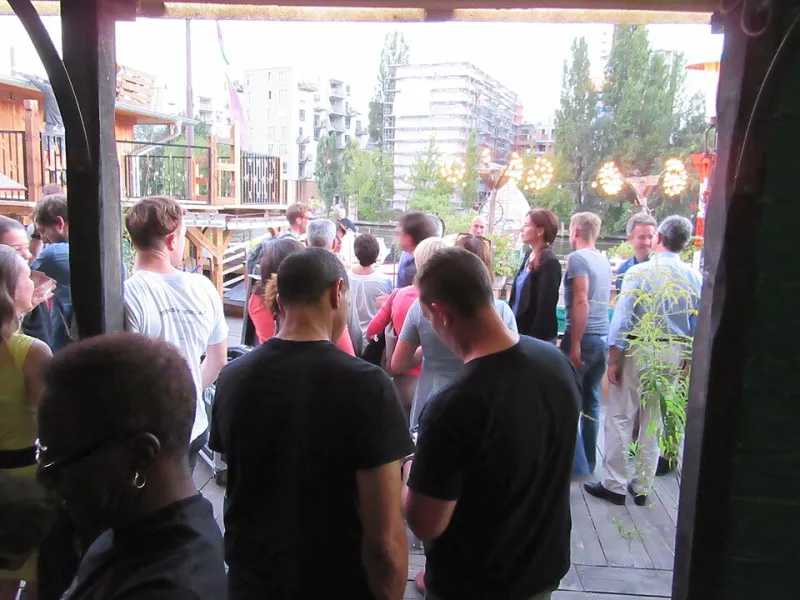
Photo: vic_burton, CC BY-SA 2.0, via Wikimedia Commons
There is a particular sound at Margate Festival that never makes the poster: the hush after one act finishes and before the next begins. The PA clicks off. A seagull fills the silence. Someone in the crowd says, “Was that it?” Someone else says, “I think there’s a thing on the harbour arm.” And for about fifteen minutes, the festival stops being a schedule and becomes a town again.
We spend months arguing about line-ups. We screenshot clash-finders. We plan toilet breaks like military manoeuvres. Then the weekend arrives and the bits we remember are rarely the bits we circled in the programme. They are the changeover, the queue, the wrong turn, the chips eaten standing up because the bench was wet. The gaps are not the failure of the festival. They are the connective tissue.
The changeover is a free show
Watch a stage crew at work and you learn more about how a festival ticks than any headline set will teach you. There is tape being walked across a cable. There is a bloke with a ladder and the calm expression of someone who has done this a thousand times. There is a microphone being tapped, a monitor being coaxed, a keyboard being covered because the wind has opinions.
In Margate, the weather is part of the interval. A stage changeover by the seafront has its own drama: the gust that takes the setlist, the collective gasp as a cymbal wobbles, the cheer when the sound finally settles. You are not watching nothing. You are watching the machinery of the weekend, live and unscripted, with a sea view.
Treat it as a palate cleanser. You have just had forty minutes of loud. Now have ten minutes of odd. Let your ears reset. Let your attention drift. The next act will be better for it, and so will you.
Five minutes early is the best decision you will make
Leaving a set early feels like a small betrayal. It is also the most reliable way to find the accidental programme. Margate is built for this: leave the field, turn a corner, and the festival continues in buskers, shop radios, rehearsing choirs and someone’s cousin with a guitar outside a pub.
You do not need a tip-off. You need a willingness to miss the last chorus. Pick one act a day that you like but do not love, and give yourself permission to slip out five minutes before the end. Follow the sound you can hear but cannot place. Walk towards the harbour arm. Stand still for a minute. The town will do the rest.
The best accidental acts are not secret. They are simply unlisted. A brass quartet warming up behind a café. A poet reading to four people and a dog. A DJ testing a rig with a song you had forgotten you loved. These are not consolation prizes. They are the reason a festival in a town beats a festival in a field.
The chip-shop detour counts as programming
There is a moment in every Margate Festival weekend when the gap between sets becomes a gap between meals. You did not plan to eat now. But the queue is short, the vinegar is within reach, and the seafront railings are free. Congratulations: you have just programmed your own interval.
Do not apologise for it. The chip-shop detour is not a distraction from the festival. It is the festival’s most reliable social space. You will overhear three different reviews of the last act. You will be told which stage is running late. You will meet someone who knows a person in the band. You will eat something hot while the wind tries to steal it. This is not dead time. This is the bit you will text someone about on Monday.
A practical suggestion: build one “interval route” per day. Stage to chips to railings to the next stage. Keep it short. Keep it flexible. If it rains, the pub becomes the interval venue and the interval becomes the whole point.
Small talk is the secret headline
Festivals are sold as communal experiences, but community rarely happens during a set. It happens in the queue for the loo, the shuffle at the barrier, the shared shrug when the drizzle starts. The interval is where strangers become briefly useful to each other. “Have you seen this one before?” “Is this the queue for the thing?” “Do you know if the chips place is open?”
Margate is especially good at this because it is a town, not a compound. People are going about their day alongside you. The gap between sets is where the festival lets the real place in. A local recommends a bakery. A steward points you towards a step-free route. A stranger holds your cup while you dig for a fiver. None of this is on the lineup. All of it is the weekend.
Treat the in-between like a lineup
So here is the case for a small change of habit. Stop treating the gap as a problem to be solved with your phone. Treat it as part of the programme. Build a loose “gap plan” with three low-stakes options: something to eat, somewhere to wander, a view to stand in front of. Set a quiet alarm to leave one set early. Keep a fiver and a spare layer for the changeover. Ask a steward what is happening next, not because you need to know, but because the answer might send you somewhere unlisted.
None of this is an argument for being late to everything. It is an argument for not treating a delay as a crisis. A PA that takes ten minutes to come back is not a failure of the festival. It is a Margate minute. The tide is still doing its thing. The chips are still hot. The next act will start when it starts.
When the music stops this year, do not groan. Follow the gap. It is where the weekend actually lives.